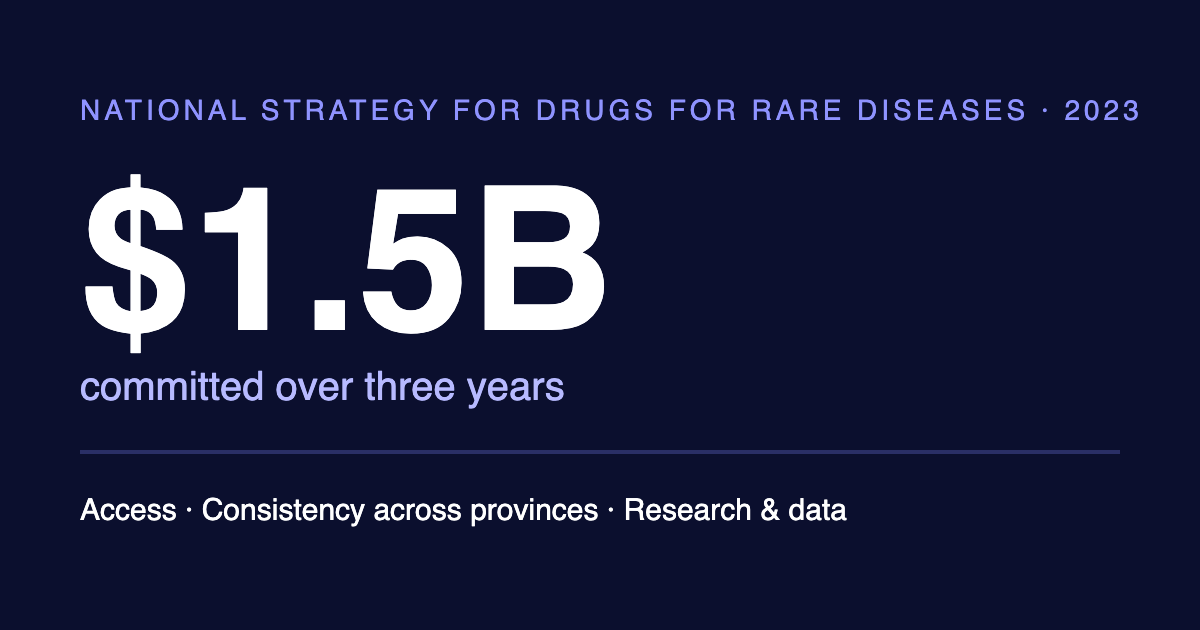
In March 2023, the Government of Canada announced the National Strategy for Drugs for Rare Diseases, with funding of up to $1.5 billion over three years. It was a significant step for a community that had long argued that access to treatment depended too much on where a patient lives.
The goals
The strategy aims to improve access to effective rare disease drugs, make them more consistent across provinces and territories, and support research and data collection. Agreements with provinces and territories are central to rolling it out.
The role of patient organizations
Groups such as the Canadian Organization for Rare Disorders (CORD) have been advocating for a national approach for decades. Their work in representing patients, and the research community supported by the Canadian Institutes of Health Research (CIHR) rare disease initiatives, shaped the conversation.
Data is the next bottleneck
Funding for drugs only helps if there is evidence about which drugs work for which patients. That depends on high quality, connected data on real-world outcomes, which is especially hard to gather for small populations.
Opportunities for researchers and industry
A national strategy creates demand for tools that can combine data across provinces, support repurposing studies and lower the cost of rare disease research. RareGeno is preparing to launch in Canada with exactly this in mind, working alongside local and national initiatives.
Details of federal programs change, so please check the Government of Canada website for the latest information.