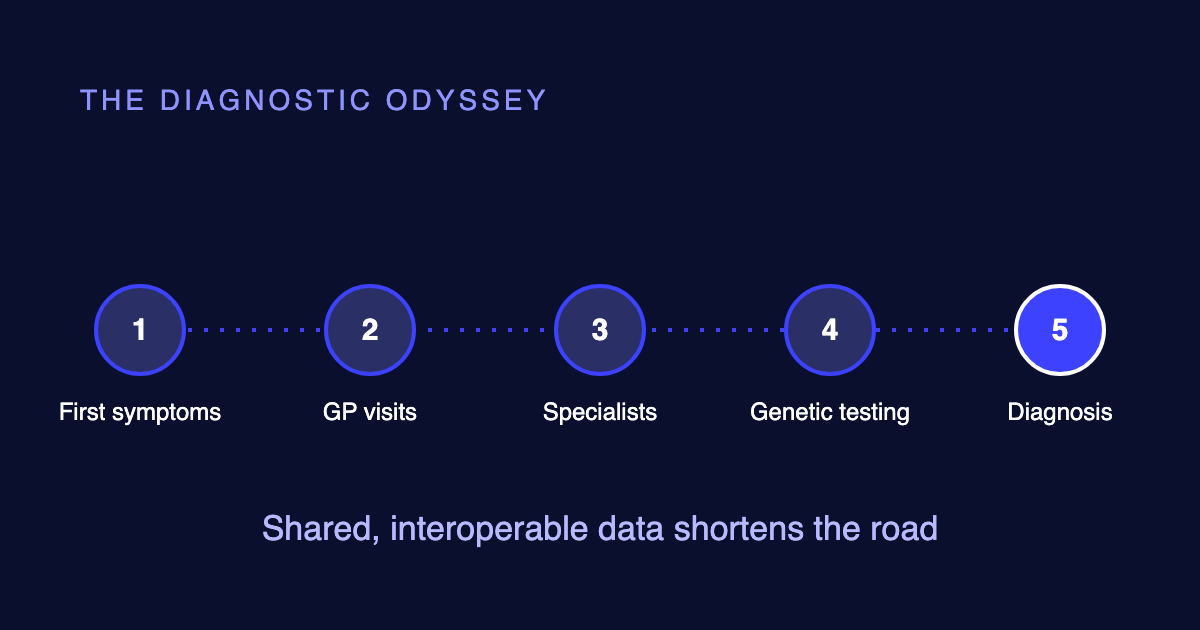
Ask families affected by a rare disease about their journey and many describe the same thing: years of appointments, tests and uncertainty before anyone names the condition. This is often called the diagnostic odyssey.
Why diagnosis takes so long
- Unfamiliarity. With thousands of rare conditions, even experienced clinicians may see a given one only a handful of times in a career.
- Overlapping symptoms. Many rare diseases look like more common problems at first.
- Fragmented care. Patients move between specialists, and their records do not always follow them.
- Limited testing access. Genetic testing is powerful but not always available, covered or interpreted consistently.
What a diagnosis changes
A diagnosis can open the door to the right specialists, avoid unnecessary procedures, connect families with patient organizations and, where treatments exist, allow them to begin. Even when no therapy exists, knowing the name of a condition can be a relief.
What is helping
Broader use of genome and exome sequencing, shared phenotype databases and tools that match a patient’s symptoms with known conditions are all shortening the path. Interoperable data, combining records from clinics, genetic kits and wearables, makes these tools more effective.
Where RareGeno fits
RareGeno works with anonymized genomic and phenotypic data so that patterns across many patients can inform both diagnosis and research. Better data sharing today means fewer families waiting tomorrow.